Companion plants for Milk Tree (Manikara Hexandra)
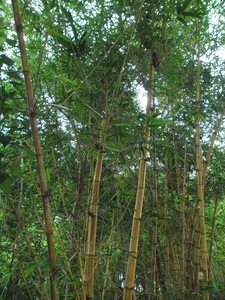
Milk Tree grows well together with 4 companion plants according to our community-maintained plant database. Companion planting helps with pest control, pollination, and better use of space and nutrients. Avoid planting Milk Tree next to Common Bamboo — see the bottom of this page.
| Image | Name | Data | Description | Actions |
|---|---|---|---|---|
|
Common bean |
2-11
Annual
Full sun
Moist
Light (sandy), Medium, Heavy (clay)
2.0
Vines
Biomass, Dye, antifungal, Nitrogen fixer
true
Leaves, Seed, Seedpod
Seed - transplant, Seed - direct sow
https://en.wikipedia.org/wiki/Phaseolus_vulgaris
Pole bean, Climbing bean, French bean, Bush bean, Dwarf bean, Kidney bean, Green bean
Fabaceae, Leguminosae
Stangenbohne
https://pfaf.org/User/Plant.aspx?LatinName=Phaseolus vulgaris
16-18°c (70-80°f)
6.0-6.8
2.5 cm
16cm
4-10 days
45-85
Fast
Sperzieboon
Costa Rica, Guatemala, Honduras, Mexico Central, Mexico Gulf, Mexico Northeast, Mexico Northwest, Mexico Southeast, Mexico Southwest, Nicaragua, Panamá
Altay, Amur, Andaman Is., Angola, Argentina Northeast, Argentina Northwest, Assam, Baltic States, Bangladesh, Belarus, Bolivia, Bulgaria, Buryatiya, Cameroon, Cayman Is., Central European Rus, Chad, Chita, Colombia, Comoros, Cuba, Czechoslovakia, Dominican Republic, East European Russia, East Himalaya, Ecuador, Ethiopia, Guinea, Gulf of Guinea Is., Haiti, Illinois, India, Iraq, Irkutsk, Jamaica, Jawa, Kazakhstan, Kenya, Khabarovsk, Kirgizstan, Korea, Krasnoyarsk, Kuril Is., Leeward Is., Malaya, Marianas, Maryland, Mongolia, Myanmar, Nepal, New Guinea, New York, Nicobar Is., Nigeria, North Caucasus, North European Russi, Northwest European R, Pakistan, Peru, Philippines, Primorye, Puerto Rico, Queensland, Rwanda, Sakhalin, Senegal, South European Russi, Sri Lanka, Tadzhikistan, Tanzania, Thailand, Togo, Transcaucasus, Trinidad-Tobago, Turkmenistan, Tuva, Uganda, Ukraine, Uzbekistan, Venezuela, Vietnam, Wake I., West Himalaya, West Siberia, Yakutskiya, Zambia, Zaïre
2-4 weeks before last frost
1 week after last frost, 12-14 weeks before first frost
3-5 years
0.4
https://powo.science.kew.org/taxon/urn:lsid:ipni.org:names:514191-1
Coffee, Condiment
|
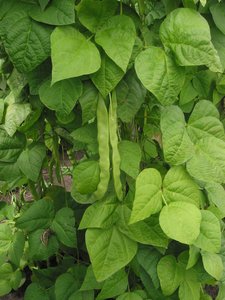
This entry describes all varieties of the common bean. This includes vining and bush/darf variaties and can have different names depending on their style of growths (see alternate names). These include the kidney bean, the navy bean, the pinto bean, the French bean and the wax bean The common bean, scientific name Phaseolus vulgaris, is a herbaceous annual plant native to the Americas, specifically the regions extending from the southwestern United States to South America. It is a member of the Fabaceae (legume) family. The common bean has a range of different appearances, depending on the variety. Most varieties have a simple, erect stem that grows to a height of 20-60 cm. The leaves are typically green and consist of 3-5 oblong leaflets. The flowers are small and white, pink, or purple in color. The fruit is a legume, which contains the seeds. The common bean is typically a small plant, but some varieties can grow to be quite large, reaching heights of up to 2 meters. The plant grows relatively quickly, with the growing season typically lasting between 60-100 days. The common bean prefers well-drained soil and full sun, but can also grow in partial shade. It is sensitive to frost and should be planted after the last frost date in the spring. To cultivate the common bean successfully, a grower may need to ensure that the soil is adequately fertilized and provide support for the plant to climb, if necessary. The common bean is edible, with the seeds and the young pods being the most commonly consumed parts. The seeds can be cooked and eaten as a protein-rich vegetable, and the young pods can be eaten as a green vegetable. The edible parts can be stored after harvest by drying the seeds or by preserving the young pods in vinegar or oil. The common bean has many uses beyond being a food source. The plant can fix nitrogen in the soil, improving its fertility and making it a useful companion plant for other crops. The dried leaves and stems of the common bean can be used as mulch or as a source of organic matter. In some cultures, the fibers from the stems are used to make ropes or other weaving materials. Additionally, the plant has been used medicinally to treat a variety of ailments. The common bean is also valuable for wildlife. The flowers attract bees and other pollinators, and the plant provides food for a variety of insects, birds, and small mammals. ### Links [Beans Seed Starting Tips @ Harvest to Table](https://harvesttotable.com/beans-seed-starting-tips/) ### Propagation - direct sow Direct-sow beans in spring after all danger of frost has passed and soil is at least 16°C (60°F). In warm-winter regions, sow beans in late summer for harvest in winter. Time sowing so that beans come to harvest before the first frost. |
Show
Edit |
|
White Clover |
4-8
Full sun
Moist
Light (sandy), Medium, Heavy (clay)
0.1
0.3
Perennial
Medium
true
Flowers, Leaves, Root
Dutch clover, purple dutch clover, shamrock
Fabaceae or leguminosae
Afghanistan, Albania, Algeria, Altay, Austria, Azores, Baleares, Baltic States, Belarus, Belgium, Bulgaria, Buryatiya, Central European Rus, Corse, Czechoslovakia, Denmark, East Aegean Is., East European Russia, East Himalaya, Egypt, Ethiopia, Finland, France, Føroyar, Germany, Great Britain, Greece, Hungary, Iceland, India, Iran, Iraq, Ireland, Irkutsk, Italy, Kazakhstan, Kenya, Kirgizstan, Krasnoyarsk, Kriti, Krym, Lebanon-Syria, Madeira, Mongolia, Morocco, Nepal, Netherlands, North Caucasus, North European Russi, Northwest European R, Norway, Pakistan, Palestine, Poland, Portugal, Romania, Sardegna, Sicilia, South European Russi, Spain, Sweden, Switzerland, Tadzhikistan, Tanzania, Transcaucasus, Tunisia, Turkey, Turkey-in-Europe, Turkmenistan, Tuva, Ukraine, Uzbekistan, West Himalaya, West Siberia, Yugoslavia, Zimbabwe
Alabama, Aleutian Is., Amsterdam-St.Paul Is, Amur, Antipodean Is., Argentina Northeast, Argentina Northwest, Argentina South, Bahamas, Bangladesh, Bermuda, Bolivia, Brazil South, California, Canary Is., Cape Provinces, Chatham Is., Chile Central, Chile North, Chita, Colombia, Colorado, Costa Rica, Crozet Is., Cuba, Dominican Republic, Easter Is., Ecuador, Falkland Is., Fiji, Free State, Guatemala, Haiti, Hawaii, Honduras, Idaho, Illinois, Jamaica, Japan, Jawa, Juan Fernández Is., Kamchatka, Kentucky, Kerguelen, Kermadec Is., Khabarovsk, Korea, Kuril Is., KwaZulu-Natal, Labrador, Magadan, Maryland, Mexico Southwest, Minnesota, Nansei-shoto, Nevada, New Guinea, New Mexico, New South Wales, New York, New Zealand North, New Zealand South, Newfoundland, Nicaragua, Norfolk Is., Northern Provinces, Oregon, Panamá, Peru, Primorye, Queensland, Réunion, Sakhalin, South Georgia, Sri Lanka, St.Helena, Tasmania, Tennessee, Texas, Tristan da Cunha, Uruguay, Venezuela, Vermont, Victoria, Washington, Western Australia, Wisconsin, Yakutskiya
https://en.wikipedia.org/wiki/Trifolium_repens
https://pfaf.org/User/Plant.aspx?LatinName=Trifolium repens
https://powo.science.kew.org/taxon/urn:lsid:ipni.org:names:523626-1
0.7
Weed potential
Condiment, Tea
Animal feed, Cover crop, Dynamic accumulator, Ground cover, Nitrogen fixer
|
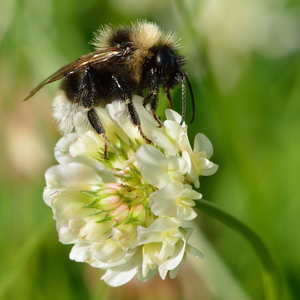
White Clover (Trifolium repens) is a perennial plant native to Europe, Asia, and North Africa. It is also known as Dutch clover, Ladino clover, and white sweet clover. White Clover has a low-growing, mat-forming habit and can reach a height of 8-16 inches. The leaves are trifoliate (arranged in groups of three) and have a characteristic white "V" shape on the upper surface. The flowers are small and white, arranged in spherical heads. White Clover prefers well-draining soil and full sun, but it can also grow in partial shade. It is tolerant of a wide range of temperatures and is hardy in USDA zones 3-10. The leaves and flowers of White Clover are edible and can be eaten raw in salads or cooked as a leaf vegetable. The plant can also be used to make tea. White Clover is often grown as a ground cover or forage crop for livestock. It is valued for its ability to fix nitrogen in the soil, improving soil fertility. It is also attractive to bees and other pollinators. White Clover is often used in lawns as a natural alternative to grass, as it can tolerate frequent mowing and has a low growing habit. |
Show
Edit |
|
Rosemary |
6-11
Perennial
Full sun
Dry, Moist
Light (sandy), Medium
Evergreen
1.5
Herbs
Attracts insects, Hedgerow
true
Leaves
https://en.wikipedia.org/wiki/Rosemary
Medium
Lamiaceae or labiatae
true
Rosmarinus officinale, rosmarinus officinalis
https://pfaf.org/User/Plant.aspx?LatinName=Rosmarinus officinalis
Albania, Algeria, Baleares, Corse, Cyprus, East Aegean Is., Egypt, France, Greece, Italy, Libya, Morocco, Portugal, Sardegna, Sicilia, Spain, Tunisia, Turkey, Yugoslavia
Azores, Bermuda, Bulgaria, Canary Is., Cape Verde, Germany, Great Britain, Kriti, Krym, Madeira, Mexico Central, Mexico Southwest, Texas, Trinidad-Tobago
1.2
https://powo.science.kew.org/taxon/urn:lsid:ipni.org:names:457138-1
|
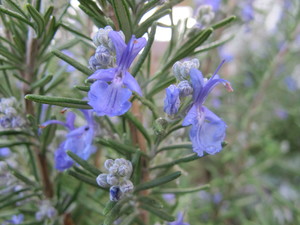
Rosemary (Salvia rosmarinus) is a woody, perennial herb native to the Mediterranean region. It is an evergreen shrub that grows to a height of 1-2 meters and has narrow, linear leaves that are about 2-4 cm long and 1-2 mm wide. The leaves are dark green in color and have a strong, pungent aroma. The flowers of rosemary are blue, purple, or white in color and grow in clusters on the tips of the branches. Rosemary prefers well-drained soil and full sun, and it grows best in temperate climates. It can be grown in a variety of soil types, including sandy and loamy soils, but it does not tolerate wet or waterlogged conditions. To cultivate rosemary successfully, the plant should be watered regularly during the growing season and pruned regularly to maintain its shape. Rosemary's leaves are edible and can be used as a seasoning in a variety of dishes. The leaves can be dried and stored for later use, or they can be used fresh. They can also be used to make tea. Rosemary has a number of uses, including as a medicinal herb and as a source of essential oils. It has been used to treat a variety of ailments, including indigestion, headaches, and muscle pain. It has also been used to improve memory and cognitive function. In addition, rosemary has been used as a fertility aid and to improve circulation. Rosemary is not particularly valuable as a food source for wildlife, but it can provide shelter and habitat for a variety of animals. It is often used as a decorative plant in gardens and landscaping. |
Show
Edit |
|
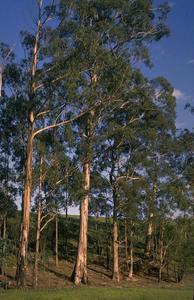
Tasmanian Blue Gum |
https://en.wikipedia.org/wiki/Eucalyptus_globulus
Fast
Dry, Moist, Wet
Full sun
9-11
Tall trees
Eurabbie, blue gum, blue eucalyptus
Light (sandy), Medium, Heavy (clay)
Myrtaceae
55.0
Weed potential
https://pfaf.org/User/Plant.aspx?LatinName=Eucalyptus globulus
New South Wales, Tasmania, Victoria
Albania, Azores, Baleares, Bangladesh, Bolivia, California, Cambodia, Canary Is., Caroline Is., China South-Central, China Southeast, Costa Rica, East Aegean Is., Easter Is., Ecuador, El Salvador, Eritrea, Ethiopia, France, Free State, Great Britain, Guatemala, Hawaii, India, Ireland, Italy, Juan Fernández Is., Kenya, Leeward Is., Lesser Sunda Is., Madeira, Mexico Southeast, Mexico Southwest, Morocco, New Zealand North, New Zealand South, Pakistan, Panamá, Paraguay, Peru, Portugal, Rwanda, Sardegna, Sicilia, Spain, St.Helena, Tanzania, Transcaucasus, Uganda, Windward Is., Zimbabwe
https://powo.science.kew.org/taxon/urn:lsid:ipni.org:names:592965-1
Condiment
Cleanser, Deodorant, Dye, Essential Oil, Fire starter, Lumber, Fragrance
|
Show
Edit |
What not to plant with Milk Tree
These plants are known antagonists of Milk Tree — they compete for nutrients, attract shared pests, or inhibit each other's growth: